
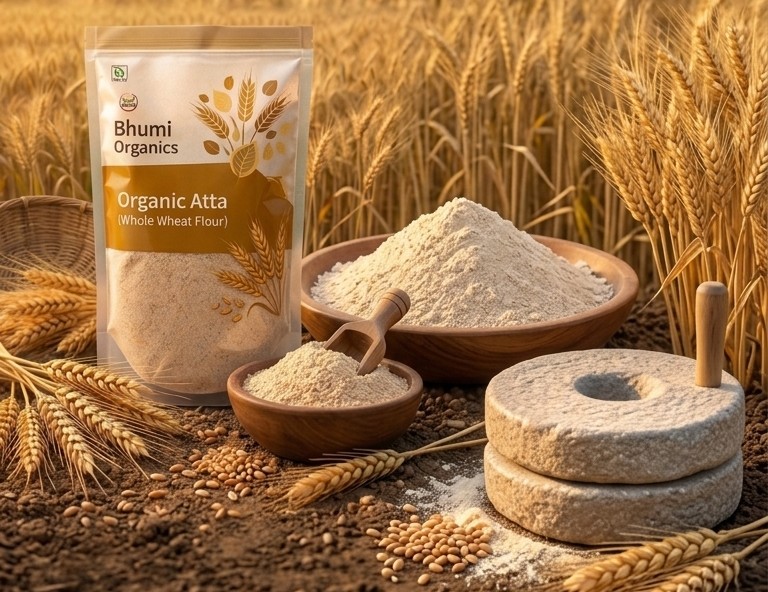
The Ultimate Guide to Organic Atta: Why It Outperforms Regular Flour Every Time
Every Indian kitchen runs on atta. It’s in our morning parathas, our evening rotis, our festival pooris. But somewhere between the wheat field and your flour dabba, most commercial atta loses a lot more than just freshness. If you’ve been wondering whether organic atta is really worth the switch, this one’s for you.
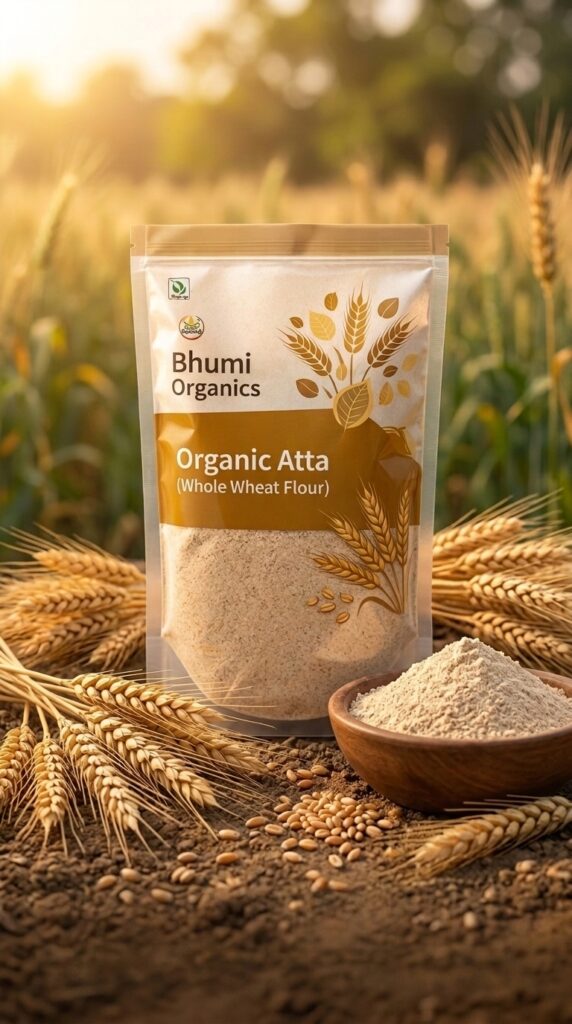
What Exactly Is Organic Atta?
Organic atta is whole wheat flour milled from wheat grown without synthetic pesticides, chemical fertilizers, or genetically modified seeds. The wheat is cultivated using natural farming methods — crop rotation, organic manure, and soil-first practices that keep the land healthy season after season. No shortcuts, no chemical residues, just wheat grown the way it was meant to be.
Non-organic atta, on the other hand, usually comes from wheat grown with heavy pesticide use and chemical fertilizers, often processed and refined in ways that strip out much of its natural nutrition before it even reaches store shelves.
How Organic Atta Is Made Differently
The difference starts long before milling. Organic wheat farming avoids synthetic urea and pesticide sprays, relying instead on compost, natural pest deterrents, and healthy soil microbiology. This isn’t just a farming preference — it directly affects the nutrient density of the grain itself. Wheat grown in chemically exhausted soil simply cannot offer the same mineral and fiber content as wheat grown in living, naturally nourished soil.
Health Benefits of Organic Atta
1. Free From Pesticide Residue
This is the most immediate and well-documented benefit of organic atta. Conventional wheat farming in India often involves multiple rounds of pesticide application, and residues can carry through to the final flour. Choosing organic atta significantly reduces your family’s exposure to these chemical residues with every roti.
2. Higher Fiber and Nutrient Retention
Organic whole wheat atta is typically stone-ground and minimally processed, which means the bran and germ — where most of the fiber, B-vitamins, iron, and magnesium live — stay intact. This supports better digestion, steadier blood sugar levels, and longer-lasting satiety compared to refined or over-processed non-organic flour.
3. Better for Gut and Heart Health
The higher fiber content in organic atta supports gut health by feeding beneficial gut bacteria and easing bowel regularity. Combined with the absence of chemical additives, this makes organic atta a heart-friendlier choice, since whole grain fiber is linked to healthier cholesterol levels over time.
4. No Hidden Additives or Bleaching Agents
Some commercial atta brands use bleaching agents or anti-caking additives to improve shelf appearance and texture. Organic atta skips all of this, giving you flour that’s closer to its natural, unprocessed state.
5. Supports Long-Term Wellbeing, Not Just a Meal
The benefits of organic food aren’t only about what’s absent — pesticides, chemicals, additives — but also about what’s preserved. Organic atta retains more of wheat’s natural nutrition, which compounds over time into better energy levels, immunity, and overall wellness for your family.
Organic Atta vs Non-Organic Atta: A Quick Comparison
| Factor | Organic Atta | Non-Organic Atta |
|---|---|---|
| Farming method | Natural farming, no synthetic chemicals | Chemical fertilizers, pesticides |
| Processing | Minimal, often stone-ground | Often refined or heavily processed |
| Fiber & nutrients | Higher retention | Often reduced |
| Chemical residue | Minimal to none | Possible pesticide residue |
| Additives | None | May include bleaching/anti-caking agents |
| Soil impact | Regenerative | Can degrade soil health over time |
Why Natural Farming Makes the Real Difference
It’s easy to think the organic vs non-organic debate starts and ends in the kitchen, but it actually starts in the soil. Natural farming practices — no synthetic inputs, crop rotation, organic composting — keep soil microbiomes alive and thriving. Healthy soil produces wheat with a naturally richer nutrient profile, which is why the benefits of organic atta trace directly back to how and where the wheat was grown, not just how it was milled.
This is also why natural farming matters beyond personal health. It protects groundwater from chemical runoff, preserves biodiversity, and supports the long-term productivity of farmland — meaning better wheat, season after season, for generations to come.
Making the Switch to Organic Atta
Switching to organic atta doesn’t require a complete lifestyle overhaul. Start simple:
- Replace your regular atta with organic whole wheat atta for daily rotis and parathas
- Check for stone-ground, minimally processed options for maximum nutrient retention
- Look for transparent sourcing — brands that share where and how their wheat is grown
- Pair it with other organic staples like turmeric, cold-pressed oils, and millets for a fuller shift toward chemical-free eating
The taste difference is often the first thing people notice — a subtly earthier, more wholesome flavor that plain refined atta simply doesn’t have. The health benefits follow close behind.
The Bottom Line
Organic atta isn’t a trend — it’s a return to how wheat was always meant to be grown and eaten. From natural farming practices that protect the soil, to higher fiber and nutrient content, to the simple relief of knowing there’s no pesticide residue in your daily roti, the case for organic atta is hard to ignore once you look closely.
At Bhumi India Organics, our atta follows this philosophy from field to flour — grown through natural farming, minimally processed, and delivered as close to its purest form as possible.
Curious about the science behind organic farming’s impact on nutrition? The Food Safety and Standards Authority of India (FSSAI) offers detailed guidelines on organic food standards and labeling in India — a useful resource if you want to dig deeper into what “organic” really means on a label.
Ready to make the switch? Explore Bhumi’s organic atta and other farm-to-jar staples, and taste the difference natural farming makes.