
Unlock the Nutrient Power Hidden in Every Drop of Cold Pressed Oil
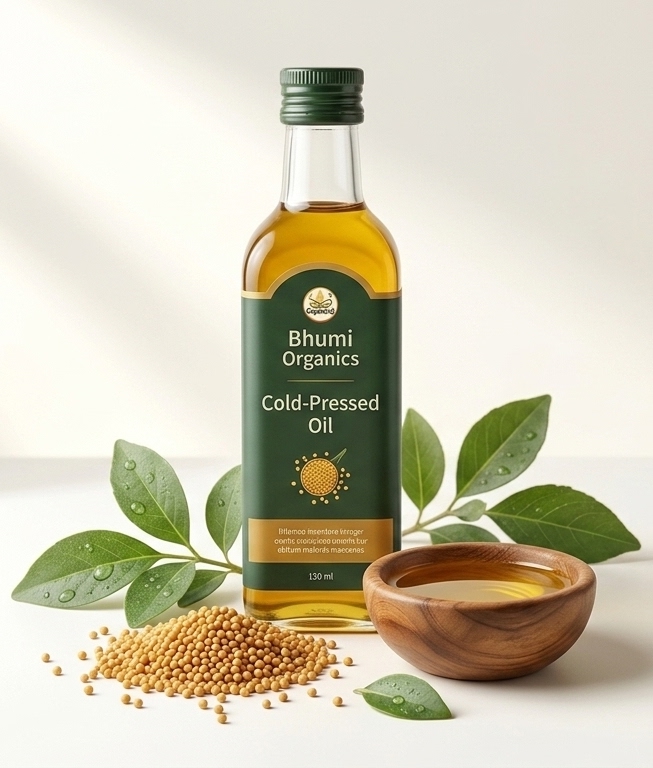
For generations, our grandmothers didn’t count calories — they trusted their ghani. Long before “nutrient density” became a buzzword in wellness circles, Indian households understood a simple truth: how food is made matters as much as what it’s made of. Today, science is finally catching up to what tradition always knew.
The Shift From “How Much” to “How Good”
Every generation of shoppers — from Gen Z to Baby Boomers — is now asking a different question at the grocery shelf. Not just “Is this healthy?” but “How much nutrition am I actually getting per bite?” This is nutrient density: the amount of fiber, vitamins, minerals, and beneficial compounds packed into every calorie of food.
It’s a meaningful shift. For years, “organic” or “natural” labels were enough to earn consumer trust. Now, people want proof that a product is genuinely nourishing — not just free from something harmful, but actively rich in something good. And nowhere is this more visible than in the edible oil aisle.
Why Cold Pressed Oil Is at the Center of This Movement
Most cooking oils on supermarket shelves today are refined — extracted using high heat and chemical solvents, then bleached and deodorized to give them a long shelf life and a neutral taste. The process is efficient, but it comes at a cost: heat-sensitive nutrients, antioxidants, and natural flavour compounds are largely stripped away in the process.
Cold-pressed oil takes the opposite path. Seeds are pressed mechanically, at low temperatures, with nothing added and nothing extracted through chemicals. What you get is oil in its most natural state — retaining more of its original:
- Antioxidants and polyphenols, which help the body fight everyday oxidative stress
- Natural vitamin E, a nutrient that degrades quickly under high heat
- Essential fatty acids in their unaltered form, rather than fractured by chemical processing
- Authentic flavour and aroma — the reason cold-pressed groundnut or mustard oil tastes noticeably richer than refined versions
In short, cold-pressing doesn’t just preserve taste — it preserves the very nutrients that make oil worth consuming in the first place.
The Bigger Health Conversation Happening Right Now
There’s a growing understanding that how processed a food is can matter just as much as its ingredient list. Consumers are increasingly reading labels not just for what’s included, but for how many steps a product has gone through before reaching their kitchen. Minimally processed foods — foods that stay closer to their natural form — are gaining trust precisely because there’s less room for nutrients to be lost or replaced along the way.
Cold-pressed oil fits naturally into this conversation. It’s not marketed as a “superfood” or dressed up with trendy claims — it simply does less to the ingredient and lets its natural nutrition speak for itself. That’s a philosophy Indian households have followed for centuries, and one that modern nutrition science increasingly supports.
What This Means for Your Kitchen
If you’re evaluating the oil in your kitchen, here are a few practical questions worth asking:
- Was it pressed with heat, or cold-extracted? Heat speeds up extraction but degrades sensitive nutrients.
- Was anything added or removed chemically? Refined oils often undergo solvent extraction and deodorization — cold-pressed oils skip both.
- Does it still smell and taste like the seed it came from? A neutral, odourless oil is often a sign of heavy processing; a distinct aroma usually signals minimal intervention.
- Is the sourcing transparent? Knowing where the seeds are grown and how the oil is extracted builds real trust — not just a label claim.
These small checks help you move from simply buying “organic” to buying genuinely nutrient-dense food — which is where the real health benefit lies.
Rooted in Tradition, Made for Today
At Bhumi India Organics, our cold pressed oil is made the way oil was always meant to be made — slowly, mechanically, and without shortcuts. We work directly with farmers who grow our groundnuts and other oilseeds using organic practices, and we press each batch at low temperatures to protect the nutrients nature already put there. No refining. No additives. No compromise.
It’s the same principle we apply across our entire range — from our turmeric and jeera to our rava and groundnuts. We believe food should nourish you the way it nourished generations before us, without cutting corners in between.
Taste the difference that comes from doing less, not more. Explore our cold-pressed oil and the rest of the Bhumi India Organics range, and bring home a kitchen staple that’s as nutrient-rich as it is rooted in tradition. [Shop the collection today →]
-
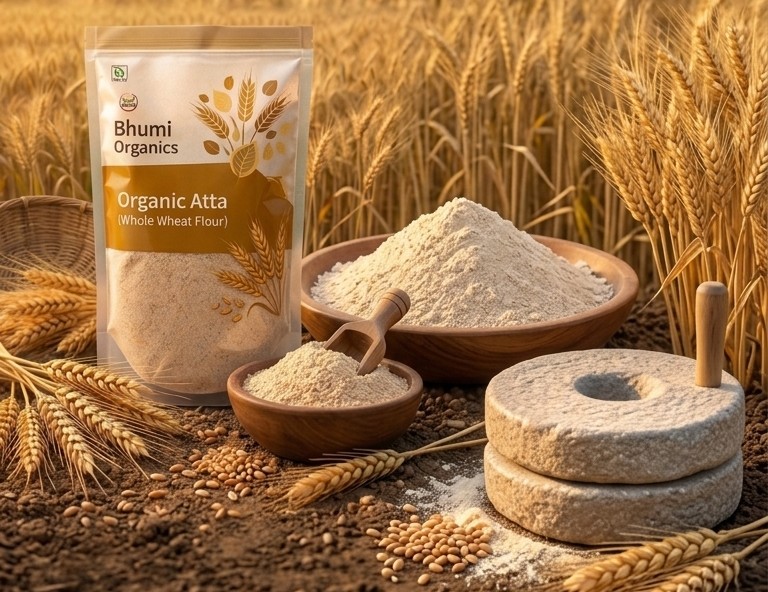
Organic Atta vs Non-Organic Atta: Why Your Roti Deserves Better
The Ultimate Guide to Organic Atta: Why It Outperforms Regular Flour Every Time Every Indian kitchen runs on atta. It’s in our morning parathas, our evening rotis, our festival pooris. But somewhere between the wheat field and your flour dabba, most commercial atta loses a lot more than just freshness. If you’ve been wondering whether…
-
Why Nutrient Density Is the New Gold Standard in Indian Kitchens — And Why Cold Pressed Oil Leads the Way
Unlock the Nutrient Power Hidden in Every Drop of Cold Pressed Oil For generations, our grandmothers didn’t count calories — they trusted their ghani. Long before “nutrient density” became a buzzword in wellness circles, Indian households understood a simple truth: how food is made matters as much as what it’s made of. Today, science is…
-
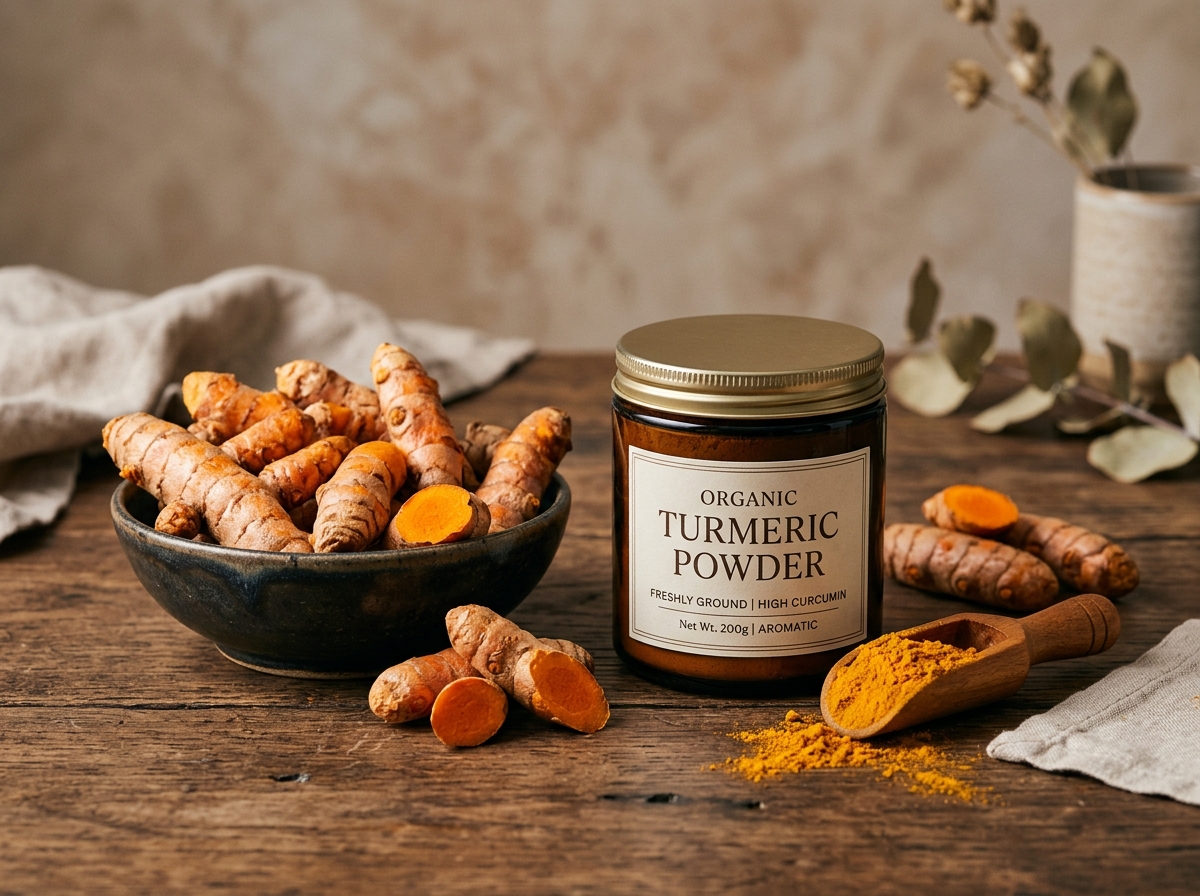
The Golden Spice: Curcumin in Organic Turmeric Why It Matters for your Immunity And Learn How to Tell If Your Haldi Is Even Real.
Walk into any Indian kitchen and you’ll find turmeric. It’s in the morning dal, the evening haldi doodh, the paste your grandmother swears by for a cut or a cold. But here’s an uncomfortable truth most of us have never stopped to ask about our daily haldi: how much of what’s in that jar is…